
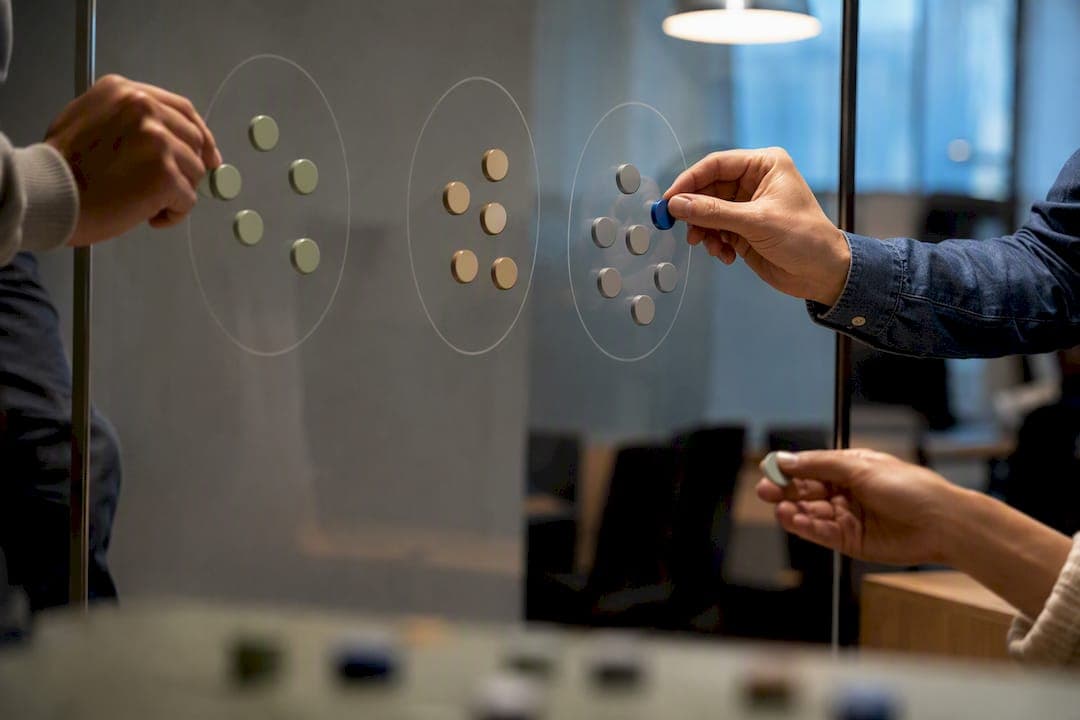
Run Start-Stop-Continue or 4Ls in your next retrospective, with a timebox proportional to the sprint length and a hard rule: the team leaves with one to three owned actions. Both formats surface real friction effectively without requiring a facilitator to learn a new game, and they produce action items your team can track. Post three columns on the board before the meeting starts, then open with a brief check-in question so people warm up before you ask them to be honest.
TL;DR:
- Teams should rotate retrospective formats every two to three sprints to prevent fatigue and maintain genuine engagement.
- Using a timebox proportional to the sprint length ensures the retrospective stays focused, with actions clearly owned and trackable.
- The "Decide what to do" phase is critical and should never be cut short, with a cap of three actionable items per retrospective to foster follow-through.
- Digital tools with anonymity features and structured voting help remote or hybrid teams participate actively and honestly.
- Choosing the right format depends on the team’s current mood, safety level, and sprint situation, with specific formats suited for emotional processing, analysis, or quick check-ins.
Table of Contents
- Sprint Retrospective Ideas: 10 Formats You Can Run Today
- Choosing the Right Format for Your Team and Sprint Goal
- Running the Five-Phase Retrospective Agenda
- Facilitation Tactics for In-Person, Remote, and Hybrid Teams
- Turning Retrospective Ideas Into Owned Actions
- 30+ Retrospective Ideas Grouped by Outcome
- Why Retrospective Fatigue Sets In (and How to Prevent It)
- A Ready-to-Run 60 to 90 Minute Retrospective Agenda
- Templates and Tools to Run These Formats Without Starting From Scratch
- The Real Reason Most Retrospectives Underdeliver
- Get Retrospective Templates and Coaching Through The Freelance PM Club
- Sources
- FAQ
Sprint Retrospective Ideas: 10 Formats You Can Run Today
Every seasoned Scrum Master keeps a rotation of formats rather than one favorite. Here are ten worth having in your back pocket, each with a quick note on when to use it and how to run it.
- Start-Stop-Continue: Best for teams new to retrospectives or recovering from a chaotic sprint. Facilitation tip: have people write silently for three minutes before anyone talks, so the loudest voice doesn't set the tone.
- 4Ls (Liked, Learned, Lacked, Longed For): Best for teams that want a fuller emotional read on the sprint. Tip: "Longed For" tends to surface the most useful process gaps, so don't rush past it.
- Mad, Sad, Glad: Best for surfacing morale issues after a rough release. Tip: name the Prime Directive out loud first. This format invites blame if you skip that step.
- Sailboat: Best for longer-term planning conversations, like a quarter kickoff. Tip: draw the anchor (risks) and wind (helpers) as two separate silent-write rounds.
- Starfish: Best for mature teams ready for nuance beyond "start" and "stop." Tip: the five categories (Keep Doing, More Of, Less Of, Stop Doing, Start Doing) reward a team that already trusts each other.
- Timeline: Best for a sprint with a specific incident or crunch you need to unpack in sequence. Tip: build the timeline on the board before the meeting so no time is lost reconstructing events live.
- Glad, Sad, Mad (variant with dot voting): Best for distributed teams needing quick prioritization baked in. Tip: cap dot votes at three per person to force real choices.
- Appreciation round: Best as a quick add-on to any format when morale is low. Tip: keep it to 60 seconds per person and make it mandatory, not optional.
- Lean Coffee retro: Best for teams that resist rigid agendas. Tip: timebox each topic to five minutes and vote to extend only once.
- One-word check-out: Best as a closing ritual for any format above. Tip: go around fast. Momentum matters more than depth here.
Pick one you haven't run in the last two sprints and commit to it before the meeting invite goes out.
Choosing the Right Format for Your Team and Sprint Goal
The format matters less than matching it to what your team actually needs right now. A team fresh off a rough sprint needs a format that processes emotion before it processes process. A team that just shipped cleanly can handle something more analytical.
Use this quick mapping as a starting point:
| Team Situation | Recommended Format | Why It Fits |
|---|---|---|
| New to retrospectives | Start-Stop-Continue | Simple structure, low cognitive load |
| Morale is low after a hard sprint | Mad, Sad, Glad | Names emotion directly instead of skipping it |
| High-performing, wants nuance | Starfish | Five categories reward deeper reflection |
| Distributed or hybrid team | 4Ls with digital dot voting | Async-friendly, built-in prioritization |
| One specific incident to dissect | Timeline | Sequence matters more than themes |
| Low psychological safety | Anonymous survey plus Start-Stop-Continue | Removes fear of being called out by name |
Rotate formats every two to three sprints. Practitioner guidance from Miro's retrospective playbook points to format fatigue as a real driver of passive, checked-out retrospectives, and rotation is the simplest fix.
Before picking a format, run through a short checklist:
- Does the timebox match your sprint length (shorter sprints need shorter retros)?
- What's the team's current energy and trust level?
- Does anyone need anonymity to speak honestly?
- Is this a process conversation, or did product feedback bleed in from the Sprint Review? Keep those separate.
Running the Five-Phase Retrospective Agenda
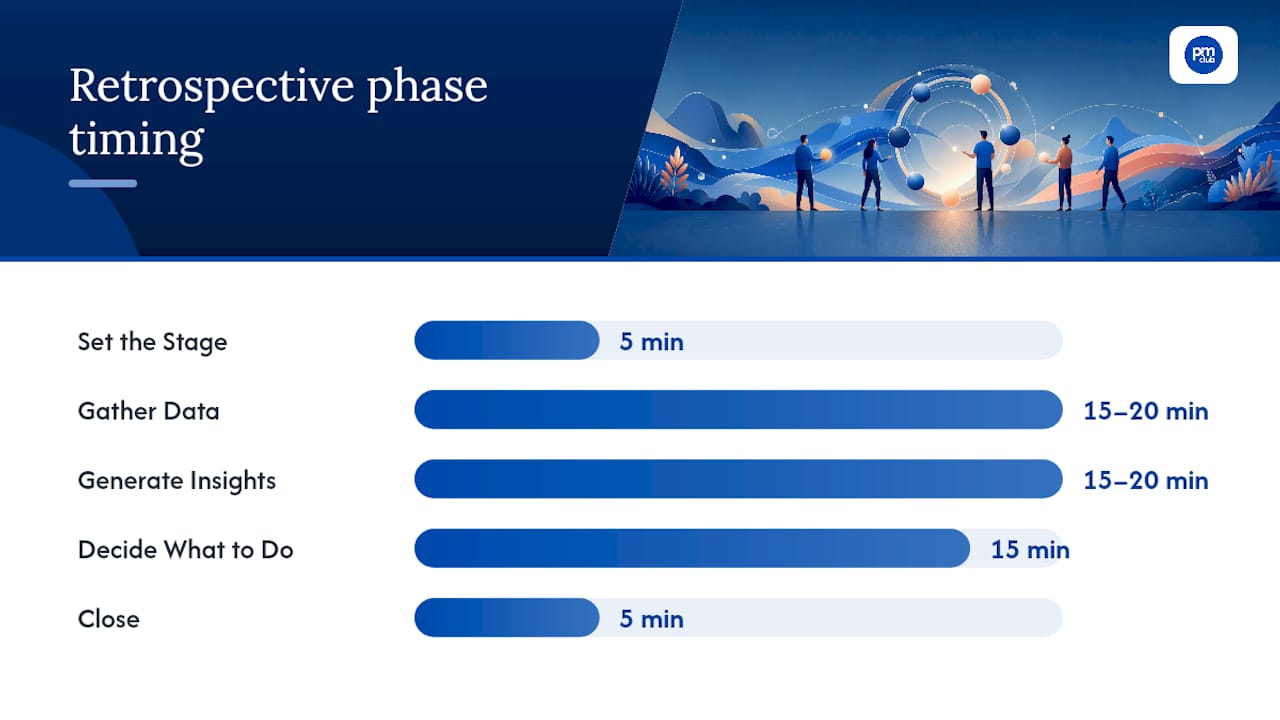
Every format you choose should still move through the same five phases outlined in The Scrum Guide: Set the Stage, Gather Data, Generate Insights, Decide What to Do, and Close. Skipping straight to "what went wrong" without setting the stage is the single most common reason retrospectives feel flat.
- Set the stage (5 minutes). Restate the Prime Directive, confirm the timebox, and ask a quick check-in question to get people talking before the hard topics start.
- Gather data (15 to 20 minutes). Collect facts and observations using your chosen format. Silent writing first, discussion second.
- Generate insights (15 to 20 minutes). Group similar points and ask "why" at least once per theme. This is where patterns emerge from scattered comments.
- Decide what to do (15 minutes). Narrow themes to one to three actions with named owners. This phase is the one teams cut short under time pressure, and it's the one that actually matters.
- Close (5 minutes). Recap the actions out loud, confirm who owns what, and end on a quick appreciation or one-word check-out.
For a two-week sprint, teams typically run retrospectives in about an hour to an hour and a half, according to Teaching Agile's timebox guidance. Month-long sprints can have retrospectives up to a few hours as a maximum timebox per the Scrum Guide, but few teams need the full allotment.
A useful facilitator script for phase four: "We have three themes on the board. Which one, if we fixed it, would make the biggest difference next sprint?" That single question does more prioritization work than any elaborate exercise.
Facilitation Tactics for In-Person, Remote, and Hybrid Teams
The format matters less than whether everyone actually participates. A brilliant exercise run by one dominant voice produces the same result as no exercise at all.
For remote and hybrid teams, digital whiteboards with built-in anonymity features solve half the participation problem before the meeting even starts. Combining anonymous input with structured voting increases participation in distributed retrospectives, according to Miro's guidance on remote facilitation, especially when paired with a visible timer that keeps discussion moving.
A few tactics worth building into your standard toolkit:
- Silent writing first, always. Give people two to three minutes to write before anyone speaks. This alone reduces groupthink more than any clever prompt.
- 1-2-4-ALL pattern. Individuals write alone, pair up to compare notes, then groups of four compare before the whole team discusses. This scales reflection without letting extroverts dominate, a technique detailed in PragProg's retrospective activities guide.
- Triple Nickels. Five people write five ideas in five minutes, then pass their sheet to the next person to build on. Good for teams stuck generating fresh ideas.
- Round-robin speaking order. Removes the "whoever talks first sets the agenda" problem entirely.
- Breakout pairs before full group. Useful when a topic is sensitive and people need to test a thought with one other person first.
Your minimum tool checklist: a digital whiteboard with anonymous card entry, a built-in polling or dot-voting feature, and a visible countdown timer.
Pro Tip: If your team has low psychological safety right now, skip live discussion for the "gather data" phase entirely. Send an anonymous survey the day before and bring pre-collected themes to the meeting instead.
Turning Retrospective Ideas Into Owned Actions
An exercise that generates twenty sticky notes and zero follow-through wasn't a retrospective. It was a venting session with better branding.
Once themes emerge, narrow them fast using one of two proven techniques, both backed by Scrum:
- Dot voting. Give each person three dots to place on the ideas they think matter most. Tally and discuss only the top two or three.
- Impact-effort matrix. Plot each idea on a simple grid: high impact and low effort goes first, always. This surfaces "low-hanging fruit" the team can knock out immediately.
- Criteria scoring. For bigger decisions, score each option against two or three criteria (cost, speed, risk) and let the numbers break ties.
Once you've picked an action, write it down using a simple template: Owner, success measure, check-in date. "James will draft a definition-of-ready checklist by Wednesday, and we'll review it in Friday's standup" beats "we should improve our definition of ready" by an enormous margin.
Retrospective effectiveness is measured by whether committed actions actually get implemented, not by how good the conversation felt, according to Scrum.org's guidance on retrospective value. The most common failure mode is picking too many actions. Cap it at three, always. A team that commits to one action and finishes it builds more trust in the process than a team that commits to seven and finishes none.
30+ Retrospective Ideas Grouped by Outcome
Different sprints call for different kinds of reflection. Here's a working catalog organized by what you're actually trying to accomplish, so you can grab an idea that fits the moment instead of defaulting to the same three exercises every time.
Quick pulse checks (5 to 10 minutes, good for busy sprints)
- Weather report check-in. Everyone describes the sprint as weather (sunny, stormy, foggy) in one word.
- Rose, thorn, bud. One good thing, one problem, one thing with potential.
- Traffic light retro. Green, yellow, red sticky notes on how the sprint felt overall.
- One-word retro. Literally one word each, no explanation required unless someone asks.
- Thumbs vote. Quick temperature check before deciding whether to go deeper.
Deep-analysis formats (30+ minutes, for sprints with real problems to unpack)
- Timeline retro. Reconstruct the sprint hour by hour around a specific incident.
- Five Whys. Take the top theme and ask "why" five times to find the root cause.
- Fishbone diagram. Map contributing factors across categories like people, process, and tools.
- Starfish. Five categories for teams ready to go beyond simple start/stop thinking.
- Sailboat. Wind, anchor, rocks, and island metaphors for longer strategic reflection.
Energizers and engagement boosters (use when energy is low)
- Superhero retro. What superpower would have helped this sprint? Surprisingly revealing.
- Movie title retro. Describe the sprint as a movie genre and title.
- Emoji check-in. React to the sprint with emojis only, then explain the top three picks.
- Two truths and a lie about the sprint. Light warmup that also surfaces real details people forgot.
- Sprint in six words. Forces precision and often produces the funniest, most honest summaries.
Recognition and appreciation formats (build morale, use monthly)
- Kudos cards. Anonymous written appreciation read aloud by the facilitator.
- Team MVP shoutout. Nominate and vote on who went above and beyond this sprint.
- Gratitude round-robin. Everyone thanks the person to their left for something specific.
- Wins wall. A running board of small wins added throughout the sprint, reviewed at retro time.
- Growth spotlight. Highlight one skill someone visibly improved this sprint.
Asynchronous formats (for distributed or low-safety teams)
- Anonymous survey pre-collection. Gather themes before the meeting, discuss live only.
- Async Start-Stop-Continue board. Open a shared board 24 hours before the meeting for pre-writing.
- Silent card sort. Everyone adds and clusters cards independently before any live discussion.
- Rolling retro doc. A living document updated throughout the sprint instead of all at once.
- Private one-on-one input. For teams where group settings feel unsafe, collect input in individual check-ins first.
Prompt-based variations (swap into any format above)
- "What almost went wrong that we caught in time?"
- "What did we assume that turned out to be false?"
- "Where did we waste time waiting on something?"
- "What would we tell a new hire to expect this sprint?"
- "What's one thing we'd do differently if we started this sprint over?"
- "What process step felt like busywork?"
For teams with low psychological safety, lean on formats 21 through 25. Anonymous, pre-collected input paired with an explicit Prime Directive reminder removes most of the fear that keeps people quiet in the room.
Why Retrospective Fatigue Sets In (and How to Prevent It)
Retrospective fatigue is real and predictable: the same format run sprint after sprint eventually produces the same shallow answers, because the team has learned exactly what the exercise will ask of them. Practitioner guidance from Miro recommends rotating formats every two to three sprints specifically to interrupt that pattern before engagement drops off.
The fix isn't chasing novelty for its own sake, though. It's pairing rotation with a consistent way of measuring whether the whole exercise is working. Track the percentage of committed actions actually completed by the next retrospective, not how the conversation felt in the room. If that completion rate is dropping, the problem usually isn't the format. It's that the team is choosing actions too big or too vague to finish in two weeks.
Run a compact experiment: adopt a new format for two sprints, measure the action completion rate both times, and compare. If completion drops after switching, don't assume the new format failed. Diagnose whether the real issue is workload, unclear ownership, or actions that were too ambitious to begin with, then adjust before swapping formats again.
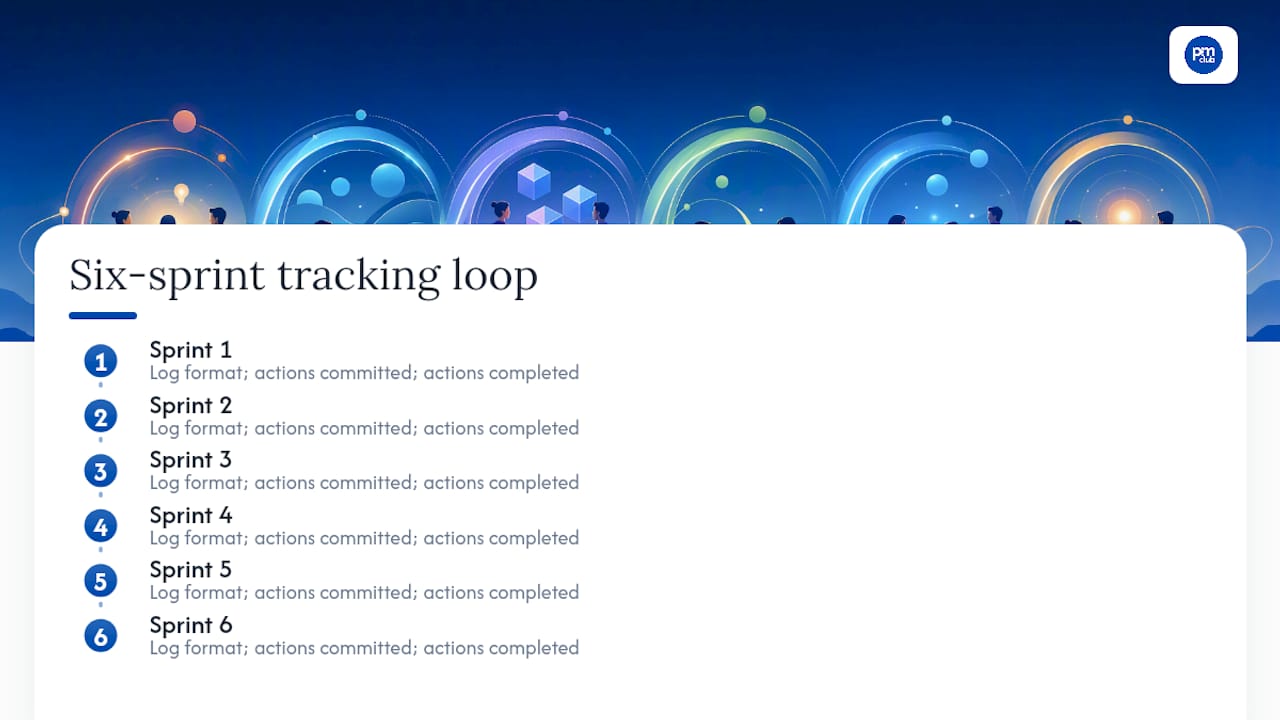
Pro Tip: Keep a simple log: format used, number of actions committed, number completed. After six sprints, you'll have real data on what actually works for your specific team, not just a gut feeling.
A Ready-to-Run 60 to 90 Minute Retrospective Agenda
Copy this directly into your next calendar invite. It fits a standard two-week sprint and follows the five-phase structure end to end.
For a one-week sprint, compress each phase by roughly a third and cap the whole session at 45 minutes. For month-long sprints, expand gather data and generate insights, since there's simply more ground to cover.
Templates and Tools to Run These Formats Without Starting From Scratch
You don't need to build a board from a blank canvas every sprint. A library of editable templates for Start-Stop-Continue, 4Ls, Starfish, and the rest lives on The Freelance PM Club's resource pages, ready to duplicate and adjust.
For workflow-specific prompts that connect retrospective output to how your team actually operates day to day, EasyFlow's guide to collaborative workflows is worth a look. Before your next session, run through a short prep checklist:
- Confirm the invite list and check whether anyone's input needs to stay anonymous.
- Test your digital whiteboard link and timer app the day before, not five minutes before.
- Pre-load the board with your chosen format's columns or categories.
- Print or share the facilitator prompts so you're not improvising mid-session.
The Real Reason Most Retrospectives Underdeliver
Most teams don't fail at retrospectives because they picked the wrong format. They fail because nobody wrote down who owns the fix, so the same complaint resurfaces three sprints later wearing a slightly different disguise. Rotate your format, sure, but treat the "decide what to do" phase as the non-negotiable part of the meeting, not the part that gets cut when time runs short.
Retrospective templates and coaching support exist specifically because freelance PMs often run these sessions without a team of peers to sanity-check their approach. Pick one format from this list you haven't tried in the last two sprints, run it, and track whether the actions actually get done.
— Ashanti
Get Retrospective Templates and Coaching Through The Freelance PM Club
Running a strong retrospective solo, without a peer group to compare notes with, is one of the harder parts of freelance project management. Some platforms give independent PMs and consultants what an in-house team gets for free: a library of editable retrospective templates, expert-led courses on facilitation, and a community of freelance PMs who've tested these formats on real client teams.

If you're managing multiple client engagements, having ready-made Start-Stop-Continue and Starfish boards can save prep time every sprint, and personalized career coaching may help figure out which facilitation skills actually move client relationships forward. The Club also connects members to a job board built specifically for freelance project management work, so the templates aren't the only reason to join. Visit The Freelance PM Club to browse the resource library and see which membership tier fits how you work.
Sources
- The Scrum Guide
- Scrum
- 10 Sprint Retrospective Ideas and Games for Your Next Sprint | Miro
- Sprint Retrospective: Ideas, Formats & Agenda Guide (2026) | Teaching Agile
FAQ
What are appropriate topics for a sprint retrospective?
Appropriate topics stick to how the team worked, not what was built. Process bottlenecks, communication gaps, tooling friction, and workload balance are all fair game, while product feedback belongs in the Sprint Review instead.
Can you give some examples of retrospective formats?
Start-Stop-Continue, 4Ls, Mad-Sad-Glad, Sailboat, Starfish, and Timeline are six of the most widely used formats, each suited to a different team mood or sprint situation.
What are some fun activities to do at a retrospective?
Energizers like the superhero retro, movie title retro, and sprint-in-six-words keep engagement high without sacrificing real reflection, especially when morale needs a lift before deeper questions come up.
What are the five steps of a sprint retrospective?
Per the Scrum Guide, the five phases are Set the Stage, Gather Data, Generate Insights, Decide What to Do, and Close, each timeboxed proportionally to the sprint's length.
How often should a team change its retrospective format?
Rotate formats every two to three sprints to prevent fatigue and keep discussion genuine, based on Miro's practitioner guidance on retrospective engagement.